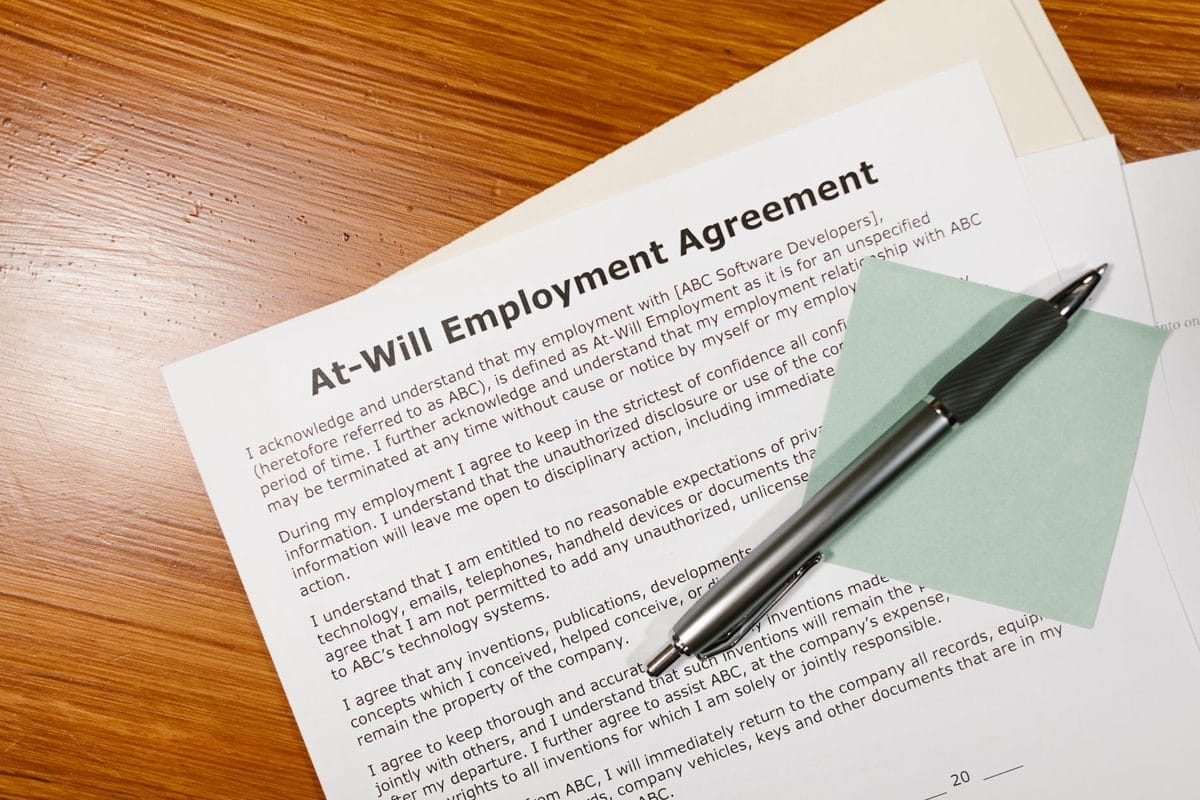
The non-compete is usually the last form in the onboarding stack, after the benefits enrollment and the laptop policy. Many people sign it without reading past the first paragraph, and then it follows them for a year or two after they leave. Whether that clause can actually be enforced depends far less on the wording than on the state where you live and work, and the rules are shifting right now. Several changes take effect in 2027, so this is a good moment to check yours before the next offer lands on your desk.
What a non-compete actually stops you from doing
A non-compete restricts what you can do after you leave. Typically it bars you from working for a direct competitor, or starting one, inside a set geographic area and for a set period, often a year or two. Employers use these clauses to protect client relationships, pricing and product plans. People tend to assume they belong to executives and engineers, but they appear in sales jobs, marketing roles and healthcare staffing contracts as well.
Two related clauses get mixed up with it. A non-solicitation clause bars you from recruiting former colleagues or taking clients with you. A confidentiality clause bars you from using the employer's trade secrets. Plenty of states that restrict non-competes still enforce these two, so a ban on non-competes does not mean you can walk out with the client list.
The state you live in matters more than the clause
Courts decide enforceability under state law, so the same sentence in two contracts can have very different results. These are the states with the most concrete changes as of November 2026:
- California voids most non-competes under Business and Professions Code sections 16600 to 16602.5. The main exception is the sale of a business, and an employer that tries to enforce a void clause can face a damages claim.
- Minnesota has banned non-competes since July 1, 2023 (Minn. Stat. § 181.988).
- Wyoming joined with a full ban effective July 1, 2025.
- Illinois bars non-competes for workers below a salary threshold set in the Freedom to Work Act. The threshold is $75,000 now and rises to $80,000 on January 1, 2027. Confirm the exact figure in 820 ILCS 90 before you rely on it, because a few thousand dollars can decide the outcome.
- Washington is heading for a near-total ban. Under HB 1155, non-competes become unenforceable on June 30, 2027, and the prohibition reaches agreements signed before that date.
Most other states sit in between. They enforce a non-compete only when its length, geography and scope are reasonable, and some add a pay floor. Because these rules change with almost every legislative session, look up your state's current statute rather than trusting a summary, including this one.
The federal ban that never took effect
In April 2024 the Federal Trade Commission issued a rule that would have banned most non-competes nationwide. A federal court in Texas blocked it in August 2024, and the FTC withdrew its appeal in September 2025. No federal ban is in effect now. The agency pursues individual cases instead, mostly in health care and staffing. That leaves the protection you get almost entirely dependent on your state.
What to check before you sign
Ask for the agreement before you accept the offer. Some employers send restrictive covenants as a final step, when you are already committed to the job and the timeline feels tight. A candidate who asks for the document early shows they read contracts, and it costs the employer very little to send it.
Then read four things:
- The duration. Twelve months is a different burden from six, and the gap matters most if your next move is in the same field.
- The geography. A clause covering "the United States" is much heavier than one limited to the clients you personally served.
- The activities. Some clauses bar any job at a competitor, while others only bar roles that overlap with what you did. The second version leaves room to move sideways, which is where many careers actually change direction.
- The governing law. A contract may name another state's law. Courts do not always honor that choice when the employee lives and works in a state with its own ban, so check both the governing-law clause and the state where you actually work.
My recommendation is to negotiate the clause before you sign, not after you resign. Ask for it to be removed, or cut to six months and limited to the clients you handled yourself. Employers who need the restriction for a specific reason usually accept a narrower version. Employers who refuse to narrow it are telling you what the next two years will look like.
There is a fair counterargument. A narrow non-compete protects a company that paid for your specialist training or gave you access to pricing data, and some employers will not hire for certain roles without one. If your knowledge is the company's knowledge, asking for the clause to be deleted may cost you the offer. In that case, negotiate the term, the radius or a payout instead of the principle.
Two versions of the same clause
Here is a hypothetical to show how much the wording moves the outcome. Imagine two offers for the same account management job, both from employers in a state that enforces reasonable non-competes.
The first clause bars you for eighteen months from working for any company in the same industry anywhere in the country. Its breadth means a move to a competitor is blocked nearly everywhere, and you would likely need to change industries to keep working in your field. The second clause bars you for six months from soliciting the accounts you personally managed. You can take a job at a competitor on day one, as long as you do not call your former clients. The second clause is far easier to live with, and both are plausible wording, which is why it pays to ask for the narrower one before you sign.
Recruiters tend to answer a few direct questions more readily than a vague request to "make it fairer." Ask which roles the clause covers, whether the restriction applies if the company lays you off, and whether the employer will put a time limit and a client list in writing. A specific question gets a specific answer, and the answer tells you more than the clause does.
If you already signed one
The clause is usually drafted from a template, and the wording is negotiable more often than people assume.
If you already signed, the state rules still matter. Washington's ban will apply to clauses signed years earlier, so a non-compete you forgot about could become void in mid-2027. Keep a copy of the signed agreement and note the date you signed it, because that date decides which rule applies to you. If you live in a state with no ban, the clause stays enforceable as written, which is why the employer's reasonableness test and its narrowest version are worth knowing before you resign.
Read the non-compete the way you read the salary line. It decides what you can do next, and you get to see it before you accept the job.